
作者:杜海宗
来源:原创
时间:2026-08-26
阅读:2677479 次
白鹿原
Exclusive: Brazilian soybean industry expects historically high export volumes to China: association_我的网站

一 |
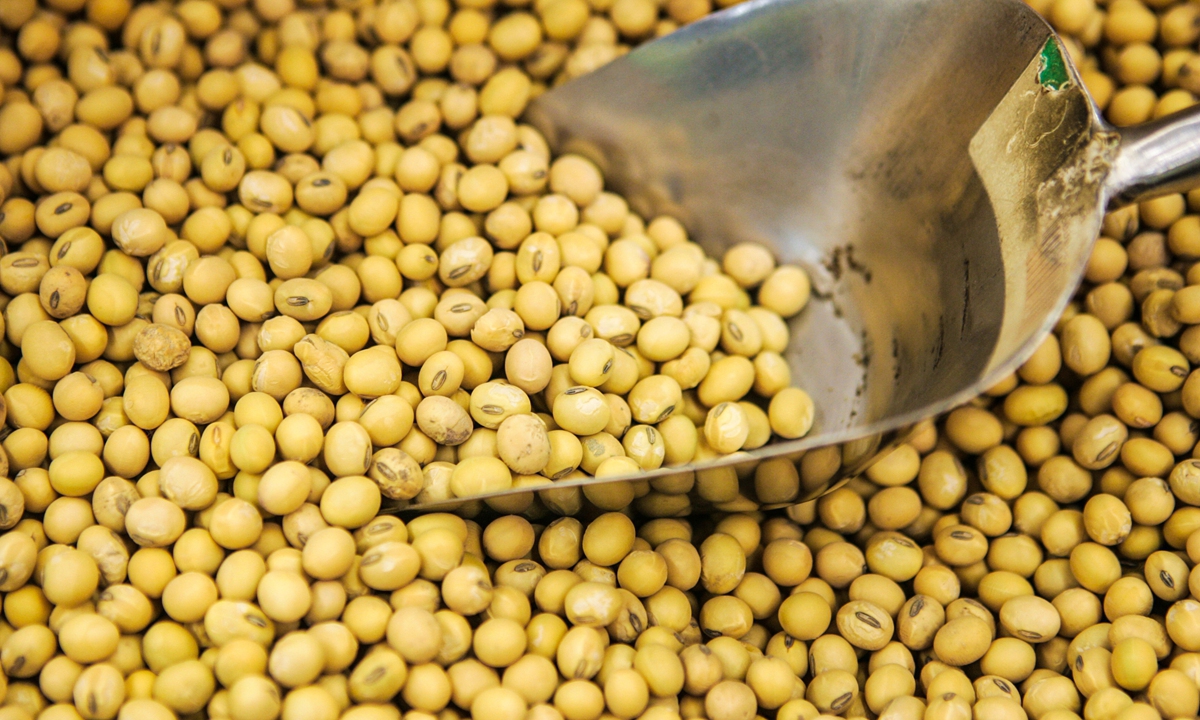
China continues to be the leading destination for Brazilian soybeans, and the Brazilian soybean industry wants to further deepen this relationship, expecting historically high volumes in the coming months, the Brazilian Association of Soybean Growers (Aprosoja Brasil) told the Global Times on Friday.
Brazilian soybean exports to China have remained very strong. China imported 12.08 million tons of soybeans from Brazil in June, up 13.7 percent year-on-year, while imports from the US fell 20.9 percent year-on-year to 1.27 million tons, according to data from the General Administration of Customs.
China imported 34.75 million tons of soybeans from Brazil during the period, up 9.1 percent year-on-year, according to Aprosoja Brasil. "Based on arrivals and customs clearance in China, there was clear growth," the association said.
According to the official data platform Brazilian Comex Stat, which records shipments at origin, 48.32 million metric tons were destined for China from January through June, largely unchanged from 48.41 million metric tons during the same period in 2025.
The difference between the two datasets mainly reflects timing and methodological differences between the recording of departures, cargoes in transit, arrivals and customs clearance.
Aprosoja Brasil said that the broader economic conclusion is the same: "Trade flows remained historically strong, China continued to be the leading destination for Brazilian soybeans, and Brazil's total soybean exports reached a first-half record of 69.57 million metric tons."
For farmers, strong export volumes help support the marketing of the crop, although record exports do not automatically mean record farm margins, said the Brazilian industry association.
China is the world's largest soybean importer. Imported soybeans are mainly used for oil production and animal feed. In terms of trading partners, China mainly imports soybean-related products from Brazil, the US, Argentina, Uruguay and Canada.
Brazil ranks among the world's leading soybean producers and exporters, with China being its largest export market for soybeans, according to the Xinhua News Agency.
Commenting on the significance of the Chinese market, Aprosoja Brasil said "China is absolutely strategic to Brazil's soybean industry," citing data showing that in 2025, China purchased 85.4 million metric tons, representing approximately 79 percent of all Brazilian soybean exports.
The two countries also have a highly complementary trade relationship. For Brazilian farmers, Chinese demand provides scale, market liquidity and greater capacity for long-term planning, said the Brazilian soybean industry association. For China, Brazil offers large, competitive and reliable supplies, as well as a crop calendar that complements production in other supplying countries.
Previously, policy shifts, such as US unilateral tariff measures, have caused disruption for US soybean farmers and other agricultural producers, Lü Xiang, research fellow at the Chinese Academy of Social Sciences, told the Global Times.
At the same time, China has been diversifying imports, including from Brazil and Argentina, to reduce risks from trade uncertainty, according to Lü.
Aprosoja Brasil noted that this partnership should not be seen merely as a temporary consequence of trade disputes involving third countries. Instead, it is a structural and mutually beneficial relationship, based on the complementarity between Brazil's production capacity and China's large demand for food, animal feed and protein, the industry group said.
Looking ahead to the soybean trade for the rest of the year, Aprosoja Brasil said that they are positive, while having a prudent mindset. Brazil has completed the harvest of a record soybean crop of approximately 180.6 million metric tons, and Brazilian soybean exports are expected to reach 116.3 million metric tons in 2026, which would also be a record, the association said.
"Brazil therefore has sufficient supply to continue serving the Chinese market strongly in the coming months... We expect historically high volumes, although not necessarily growth every single month, because soybean trade is seasonal and Northern Hemisphere supplies become more prominent during the second half of the year," it said.
。 (联合早报) 作者 红蚂蚁团队新加坡人喜欢霸位并不是新闻。

二 | 但如今这种霸位文化似乎被新加坡居民赋予了新的功能——代为排队。简单说就是,为了不傻傻站着排队等待,干脆就找一个没有生命的物件摆在地上,作为自己正在“默默排队”的标记。这么做,只为了领取居民委员会派发的免费食物。碧山东第一分区居民委员会8月23日深夜在脸书上载两张照片,一张显示了贩卖机前的水泥地板上出现一排“布阵用品”;另一张则显示“摆阵”的人井然有序排队的情景。

三 | (碧山东第一分区居民委员会脸书)“布阵用品”都有些什么?不外就是一个个折叠起来的小袋子和环保袋,上面用一个或两个小石子压着,以免被风吹走。(碧山东第一分区居民委员会脸书) (碧山东第一分区居民委员会脸书)用这种无人监管的方式来排队,难免会出现剪不清理还乱的情形。据报道,有些Auntie就声称地上的袋子是自己的,与其他排队的人吵得面红耳赤。居委会每个星期五傍晚派发免费食物的活动已经持续了三年,深受居民欢迎,每次都吸引到很多人前去领取。

四 | (碧山东第一分区居民委员会脸书)由于捐赠的食物种类不定,所以很多居民为了能选到好料,都会提前霸位以免落于人后。

五 | (碧山东第一分区居民委员会脸书)这就迫使碧山东第一分区居民委员会不得不与大家约法三章。

六 | 只允许一个家庭派一个成员亲自排队领取食物。

七 | 严禁用物件来霸位,所有摆在地上的物品将一律视为垃圾清理掉。果真应验了那句老话: 生活素质的提升可以依靠他人的善心,但个人素质的提升就无法假手于人。

八 | 在一个相对慷慨友善的大环境中,我们可以试着多体谅彼此。

九 |
Current article:http://zeqo9c.naoninanglouzhei.bond/zg98/of1u.html
Published on:11:43:14


